Pages

Showing posts with label NYU. Show all posts

Friday, August 21, 2026

Defense Audit


From DefenseScoop: Defense Department leaders instructed 30 American universities and specialized technology institutes to immediately audit their academic, financial and research connections to foreign entities that the government considers too risky or hostile to engage with. The initiation of these probes, revealed [last] Monday, marks DOD’s latest move in a yearslong effort to counter what it views as adversarial influences infiltrating U.S. academia...

Full story at https://defensescoop.com/2026/08/17/pentagon-probes-30-u-s-academic-institutions-for-potential-ties-to-adversaries/.

The institutions - which include UCLA, UC-Berkeley, and UC-San Diego - are:

Bryant University, Cornell University, Drake University, Duke University, Emory University, Georgetown University, Harvard University, Illinois Institute of Technology, Johns Hopkins University, Massachusetts Institute of Technology, New York University, Northeastern State University-Tahlequah, Oklahoma State University, Penn State University, Portland State University, Southern Illinois University-Carbondale, Stony Brook University, UC-Berkeley, UCLA, UC-San Diego, University of Cincinnati, University of Delaware, University of Illinois-Urbana-Champaign, University of Minnesota, University of North Carolina-Chapel Hill, University of South Carolina, University of Southern California, University of Texas at Austin, Virginia Polytechnic Institute and State University (Virginia Tech), Worcester Polytechnic Institute.

Monday, March 30, 2026

Straws in the Wind - Part 297

From Inside Higher Ed: The Trump administration cut off funding for area studies and foreign language education in September, putting an end to the flow of financial support for centers and programs that assisted national security strategy for decades. Justifying the cuts, the administration has said these kinds of programs are “inconsistent with Administration priorities and do not advance American interests or values.” For years, area studies centers were funded through National Resource Center grants as part of Title VI of the Higher Education Act of 1965. Congress partially restored this funding in its most recent budget, but the damage to area studies may be irreversible. 

The University of Washington, home to one of the nation’s oldest area studies centers, lost $2.5 million in National Resource Center and foreign language grants—half of which went directly to student scholarships—for the 2025–26 academic year. The University of Michigan lost about $3.4 million and the University of Kansas lost $2 million. Western Washington University’s Center for Canadian-American Studies reportedly took a 70 percent hit to its budget after the Title VI funds were pulled.

...Facing a hostile presidential administration, institutions are unlikely to stick their necks out too far for area studies, said Zachary Lockman, a historian and professor of Middle Eastern and Islamic studies at New York University. “They’re skeptical. They’re all in austerity mode. They’re under attack,” Lockman said. “Many of them just want to fly under the radar and remain invisible, so giving money to people whom the Department of Education sees as enemies of the Trump administration doesn’t seem like a wise tactic to them.” ...

[The] symbiotic government–university partnership worked for a while. But in the 1970s, while the U.S. was at war in Vietnam, that relationship began to fracture, experts explained. Government officials started to think that they weren’t getting their anticipated return on investment, [Osamah] Khalil [of Syracuse University] said. It was never a requirement that recipients of federal fellowships work for the government afterward—and in large part, they did not, he said. “One of the things that came out of Vietnam was this idea that ‘We’re not getting the experts that we wanted out of this. We’re getting campus radicals who are protesting U.S. foreign policy’”... 

Full story at https://www.insidehighered.com/news/business/academic-programs/2026/03/26/area-studies-once-vital-wither-without-funding.

Sunday, March 1, 2026

Straws in the Wind - Part 268

From the Chronicle of Higher Education: ...New York University will begin a new initiative aimed at getting students to spend less time on their phones. It’s called NYU IRL (short for “in real life”), and it spans the university’s Manhattan, Abu Dhabi, and Shanghai campuses, where students will be enticed to enter “device-free zones" ...NYU IRL, which Linda G. Mills, NYU’s president, announced earlier this year, includes new resources for faculty to try “device optimization” in their classrooms, such as making it a featured topic in the university’s faculty learning exchange week, which is happening now. NYU will also host in-person events like a “supper club” in its dining halls.

To mark the beginning of the effort, NYU professor and author Jonathan Haidt is hosting a “fireside chat” early next month to talk through his bestselling book, The Anxious Generation. The 2024 book argues that the rise in smartphone usage in childhood over the last decade has contributed directly to the rise in mental illness in younger generations. Mills cites Haidt’s findings as a major inspiration for the new program...

Full story at https://www.chronicle.com/article/nyu-wants-students-to-put-down-their-phones-will-they.

===

From the NY Times: The Defense Department has decided to cut academic ties with nearly two dozen top universities and think tanks as part of Defense Secretary Pete Hegseth’s campaign against what he calls anti-American values and “wokeness.” ...In a video published to social media* ...Mr. Hegseth denounced the institutions in blistering language, calling them politically liberal institutions with “wicked ideologies” that were indoctrinating U.S. service members. He said that, beginning in the new school year in September, the Defense Department would ban service members from attending those universities.

===

*https://x.com/secwar/status/2027474502876070386.

===

In addition to Harvard, which was banned earlier this month, the Defense Department said the banned institutions would include the Massachusetts Institute of Technology, Princeton, Yale, Brown, Georgetown, Johns Hopkins, Columbia, George Washington, Tufts, St. Louis and Carnegie Mellon, as well as the College of William & Mary, Middlebury College and Queen’s University in Ontario.

When Mr. Hegseth cut ties with Harvard, it was seen as part of a wider pressure campaign by the Trump administration to force the university to cut a deal with the government. But some of the universities that were banned on Friday have already agreed to a laundry list of demands from the Trump administration as part of an effort to remake the culture of higher education. The Defense Department said it would also cut ties with seven high-profile think tanks in Washington known for their defense and national security analysis: the Center for Strategic and International Studies, New America, the Brookings Institution, the Atlantic Council, the Center for a New American Security, the Council on Foreign Relations and the Henry L. Stimson Center...

Mr. Hegseth, who served as an infantry officer with the National Guard, graduated from Harvard’s Kennedy School in 2013 with a master’s degree in public policy... The Defense Department said it was considering replacing the programs with those at institutions including state universities and conservative Christian schools like Liberty University and Hillsdale College...

Full story at https://www.nytimes.com/2026/02/28/us/politics/pentagon-universities-think-tanks.html.

Thursday, January 15, 2026

Why folks are nervous - Part 2

As blog readers will know, there is nervousness on campus about a move by Murphy Hall to consolidate the various computer systems at UCLA into a single "One IT" system. The Senate has passed a resolution about this matter.

Apart from concerns about individual privacy, etc., there is the record of failures to seamlessly install new computer systems. Blog readers will know about the Regents ongoing lawsuit against contractors involved in a system that was supposed to handle pension payments.

The Chronicle of Higher Education recently had a piece about why universities push for centralized, unified computer systems:

Colleges now exist in a world where one human slip-up or system vulnerability can lead to a disastrous data breach that impacts thousands of people’s personal data. In the past two months, the University of Pennsylvania, Harvard University, and Princeton University have fallen victim to hacks. Earlier in 2025, so did Columbia University, Dartmouth College, and New York University. Those recent headlines have made higher ed’s cybersecurity infrastructure seem particularly inadequate... The reality, tech experts say, is that colleges are constantly being bombarded with cyberattacks. Powered by artificial intelligence, these strikes have become more sophisticated. And there’s only so much that campus IT departments can do...

A fundamental problem for higher ed is that the best IT strategies involve pushing for more centralized control of technology use, which often doesn’t go over well on a college campus. Especially at large private institutions, different schools or departments, such as the business school and the medical school, are more likely to have their own IT teams, said [Anita] Nikolich, [director of research and technology innovation at the University of Illinois at Urbana-Champaign] who used to be executive director of IT infrastructure at the University of Chicago. “When you have so many independent IT departments … that itself is a huge risk factor,” she said.

Universities typically resist centralization, Nikolich said, in the name of academic freedom. “It’s a mentality of, if I become centralized and shared, my faculty are not going to be allowed to do what they need to do for their research,” she said...

Full story at https://www.chronicle.com/article/why-cyberattacks-in-higher-ed-keep-proliferating.

What yours truly gathers from the above is that when university computer folks get together in whatever forums they do, central control is now a thing.

Wednesday, July 2, 2025

Tough Credit

From Inside Higher Ed: ...The Senate version of the reconciliation bill, which President Donald Trump has urged Congress to pass as early as next week, would cap professional degree loans at $200,000 and all other graduate loans at $100,000. Both the House and the Senate also proposed completely eliminating Grad PLUS, an unsubsidized federal loan with no borrowing limit that has helped students from modest backgrounds pay for graduate degrees since 2006. In the two decades since Grad PLUS was implemented, the number of Americans with a postgraduate degree has doubled, according to 2021 Census data.

...Proponents of the loan program argue that growth is a sign of its success in expanding access; its critics say it’s because colleges saw an opportunity to boost enrollment in highly profitable programs. Federal graduate loans can be used for any postgraduate degree, including Ph.D.s. But master’s degrees and professional degrees, such as those in law and medicine, tend to be far more expensive. Graduate students also have much less access than undergraduates to institutional and public aid, meaning low- and middle-class students almost always have to borrow.

Some universities, Kelchen said, rely heavily on their graduate programs for tuition revenue—particularly large private institutions such as New York University and the University of Southern California, both of which enroll more graduate than undergraduate students...For some smaller universities that have struggled to maintain undergraduate enrollment, including Simmons University in Boston and Nova Southeastern in Florida, boosting graduate program offerings has become a key revenue stream.

...Conservatives aren’t the only ones skeptical of the current graduate loan system. Sandy Baum, a nonresident senior fellow at the liberal-leaning Urban Institute and a longtime scholar of student debt, believes that unlimited loans have enabled more students to borrow heavily to pay for degrees whose economic returns are often dubious. Graduate students make up about 15 percent of all higher education enrollment in the U.S. but account for nearly 40 percent of all outstanding student debt, according to a 2020 report from the Congressional Budget Office...

Full story at https://www.insidehighered.com/news/admissions/graduate/2025/06/26/can-graduate-programs-survive-federal-loan-caps.

Saturday, May 31, 2025

Terrell

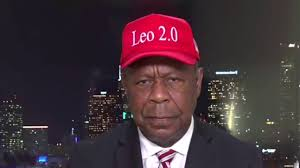
From Politico: The head of the federal antisemitism task force that has helmed the controversial crackdown on universities in recent months says his team plans to intensify its actions in the wake of the shooting that left two Israeli Embassy staffers dead in downtown Washington. Leo Terrell, a former Democrat and Fox News contributor-turned Department of Justice senior counsel in the civil rights division, is the little-known figure behind the Trump administration’s efforts to target 10 academic institutions across the country over claims of antisemitism...

Harvard isn’t the only school facing the administration’s ire. Terrell’s task force in February announced a list of 10 institutions that it planned to investigate for allegedly allowing antisemitism on their campuses. In addition to Harvard, the universities include: Columbia; George Washington; Johns Hopkins; New York University; Northwestern; the University of California, Berkeley; the University of California, Los Angeles; the University of Minnesota; and the University of Southern California...

Full profile at https://www.politico.com/news/2025/05/23/leo-terrell-trump-universities-harvard-00368352.

Saturday, March 1, 2025

The Visit

From a DOJ news release of 2/28/25:

The Federal Task Force to Combat Anti-Semitism announced that it will be visiting 10 university campuses that have experienced antisemitic incidents since October 2023. Created pursuant to President Trump’s Executive Order on Additional Measures to Combat Anti-Semitism, the Task Force set as its first priority to eradicate antisemitic harassment in schools and on college campuses...

The 10 universities identified by the Task Force are: Columbia University; George Washington University; Harvard University; Johns Hopkins University; New York University; Northwestern University; the University of California, Los Angeles; the University of California, Berkeley; the University of Minnesota; and the University of Southern California...

Full release at https://www.justice.gov/opa/pr/federal-task-force-combat-antisemitism-announces-visits-10-college-campuses-experienced.

Saturday, September 23, 2023

Rank - Part 3 (comparisons and equivalencies)

As might be expected, the latest US News and World Report college rankings have created controversy, in part because of a shift in methodology that shifted ranks up and down compared with the prior year.

You can read more about the controversies - somewhat similar to the earlier controversies concerning law schools and med schools at:

https://www.insidehighered.com/news/admissions/traditional-age/2023/09/22/us-news-rankings-changes-spur-complaints-and-apologies.

But rather than get into the weeds, yours truly thought we might benefit from looking at comparisons and equivalencies. As you likely know, both UCLA are touting themselves as the best public university. But the public qualifier actually means both tied for 15th. 

But that means the two are not quite so good as Chicago, but are a bit better than Rice.

Moving down the list we find that UC-Davis and UC-San Diego at #28 are equivalent to each other and also to the U of Florida.


UC-Irvine and UC-Santa Barbara are equivalent to NYU at #33.


At #60, we find that UC-Merced is equivalent to Renssalear and Santa Clara U.


At #76, UC-Riverside is like SUNY-Buffalo.


And finally at #76, UC-Santa Cruz is like Rutgers and the U of Illinois-Chicago.


Go figure.

Thursday, April 13, 2023

Sometimes No (US) News Is Good News - Part 13 (ranked anyway)

Over the last few months, we noted the controversy over the rankings by US News and World Report of law schools and the decision of several major law schools not to participate. The magazine went ahead and gathered information without cooperation and its rankings have now emerged for the top 14 schools. 

Its news release takes note of the controversy and states that "earlier this year, some law schools chose not to provide their institution’s statistical data to U.S. News. In an effort to provide students with a level playing field for comparison, U.S. News ranked law schools using metrics that are mandatory for disclosure by the American Bar Association. This means that certain factors such as expenditures, at-graduation employment rate and JD graduate indebtedness are no longer included in the formula." Apparently, the full list of ranked schools will appear on April 18th. 

RANK SCHOOL

1 Stanford University (tie)

1 Yale University (tie)

3 University of Chicago

4 Harvard University (tie)

4 University of Pennsylvania (Carey) (tie)

6 Duke University (tie)

6 New York University (tie)

8 Columbia University (tie)

8 University of Virginia (tie)

10 Northwestern University (Pritzker) (tie)

10 University of California, Berkeley (tie)

10 University of Michigan—Ann Arbor (tie)

13 Cornell University

14 University of California—Los Angeles

===

Full release at https://www.usnews.com/education/best-graduate-schools/articles/focusing-on-outcomes-for-students-a-preview-of-the-2023-2024-u-s-news-best-law-school-rankings.

Thursday, January 19, 2023

Sometimes No (US) News Is Good News - Part 12 (What's Up Doc?)

Rest assured, dear readers, that we are, as always, preserving the recordings of the Regents meetings this week and will get to review them in due course. We have already reviewed the Tuesday meeting. Meanwhile, other things are happening in the world. 

Remember the story of the law schools, including at UC, which pulled out of cooperating with the rankings published by US News and World Report? Now the Harvard Med School has joined the pull-out movement. Will other med schools follow? What about UC med schools? From the New York Times:

Harvard Medical School will no longer submit data to U.S. News & World Report for the magazine’s annual “best medical schools” rankings, becoming the university’s second graduate school to boycott the list in recent months, the school’s dean said on Tuesday. In a letter, Dr. George Daley, dean of the faculty of medicine, said he had been debating the decision since becoming dean six years ago and was inspired by a group of top law schools that withdrew from the rankings last fall. “My concerns and the perspectives I have heard from others are more philosophical than methodological, and rest on the principled belief that rankings cannot meaningfully reflect the high aspirations for educational excellence, graduate preparedness, and compassionate and equitable patient care that we strive to foster in our medical education programs,” Dr. Daley said.

U.S. News has published the rankings for decades, and while they have come under growing criticism, they continue to be an influential guide for students and their parents during the college selection process. Dr. Daley said the rankings create what he called “perverse incentives” for institutions to report misleading information and set policies that boost rankings. Although Harvard’s medical school will no longer share key data with the magazine, it will continue to share some of the data on its admissions website. Harvard Medical School was ranked first in the magazine’s 2023 best medical school for research list, released last spring, and the Grossman School of Medicine at New York University was ranked second. Tying for third were the College of Physicians and Surgeons at Columbia University, the School of Medicine at Johns Hopkins University and the School of Medicine at the University of California, San Francisco.

Medical schools are evaluated on faculty resources, the academic achievements of entering students and qualitative assessments by schools and residency directors, according to U.S. News...

Full story at https://www.nytimes.com/2023/01/18/us/harvard-medical-school-us-news-rankings.html.

Yours truly, who taught labor economics for many years, can't help but noting that all rating and evaluation systems create perverse incentives "to report misleading information and set policies that boost rankings." We live in an imperfect world with incomplete information with which to make decisions. So, if you are going to have any kind of review system, the issue is not which one is perfect - since there will never be perfection - but which one is better than the others. But maybe it's not surprising that lawyers came up with better objections and arguments than doctors!

====

To hear the text above, click on the link below:

https://ia904704.us.archive.org/3/items/new-year-outlook/harvard%20med.mp3

Tuesday, October 25, 2022

Just a reminder: Remote instruction is not new

As we have pointed out in the past, the idea of remote instruction is not new. Above is a 1925 article about radio lectures on "Air College" from NYU.

Monday, October 3, 2022

Goodbye, Prof. Jones

A disturbing tale from the New York Times:

At N.Y.U., Students Were Failing Organic Chemistry. Who Was to Blame?

Maitland Jones Jr., a respected professor, defended his standards. But students started a petition, and the university dismissed him.

10-3-22, Stephanie Saul

In the field of organic chemistry, Maitland Jones Jr. has a storied reputation. He taught the subject for decades, first at Princeton and then at New York University, and wrote an influential textbook. He received awards for his teaching, as well as recognition as one of N.Y.U.’s coolest professors. But last spring, as the campus emerged from pandemic restrictions, 82 of his 350 students signed a petition against him.

Students said the high-stakes course — notorious for ending many a dream of medical school — was too hard, blaming Dr. Jones for their poor test scores. The professor defended his standards. But just before the start of the fall semester, university deans terminated Dr. Jones’s contract...

Read the full story at the link below:

https://www.nytimes.com/2022/10/03/us/nyu-organic-chemistry-petition.html.

===

To hear the text above, go to the link below:

https://ia601402.us.archive.org/25/items/big-ten/nyu%20jones.mp3

Thursday, April 7, 2022

Money Matters

Inside Higher Ed reproduces AAUP data on faculty salaries across various institutions. See below:

===

Top Average Salaries for Full Professors at Private Doctoral Universities, 2021–22

Columbia University $288,000

Stanford University $269,100

Princeton University $266,100

Harvard University $262,700

University of Chicago $260,200

Massachusetts Institute of Technology $255,600

University of Pennsylvania* $246,300

Yale University $243,700

New York University $242,500

Dartmouth College $234,600

===

*The University of Pennsylvania excluded non-tenure-track faculty members from the data reported to AAUP.

===

Top Average Salaries for Full Professors at Public Doctoral Universities, 2021–22

University of California, Los Angeles $240,300

University of California, Berkeley $222,500

University of California, Santa Barbara $209,600

University of California, San Diego $203,900

Colorado School of Mines $199,500

Rutgers University at Newark $195,100

University of Virginia $194,900

University of California, Irvine $194,400

University of Texas at Austin $194,200

New Jersey Institute of Technology $193,700

===

Top Average Salaries for Full Professors at Liberal Arts Colleges, 2021–22

Barnard College $183,100

Claremont McKenna College $175,000

University of Richmond $165,400

Pomona College $163,200

Amherst College $163,000

Wesleyan University $160,400

Wellesley College $160,100

Harvey Mudd College $156,800

Swarthmore College $156,300

Williams College $155,900

===

Full story at https://www.insidehighered.com/news/2022/04/07/professor-pay-fell-5-percent-year-counting-inflation.

===

The full story notes that with a 7%-ish rate of inflation, the real value of faculty pay is declining.

Thursday, December 16, 2021

Uh Oh Omicron! Are We Going Back to the Future? - Part 3

More universities are reporting outbreaks and changing plans:

Georgetown, GW, NYU and Princeton Change Course

Universities switch final exams and cancel most in-person events.

By Scott Jaschik, December 16, 2021, Inside Higher Ed

Georgetown, New York and Princeton Universities on Wednesday all announced changes in their plans for the close of the semester due to surges of COVID-19 infections on their campuses. The decisions followed Cornell University, which this week made all final exams online because of 496 active COVID cases among students.

Increase in Cases at Georgetown

A statement from Georgetown said, “We are experiencing a notable and concerning increase in COVID-19 cases on our campuses this week, and we are taking several immediate steps to help protect the Georgetown University community. Yesterday marked the largest one-day total for COVID-19 cases within our community, with 34 Georgetown community members testing positive, and the positivity rate on our campuses this week to date, 2.36 percent, is the highest we have seen.” The university is not changing plans for final exams. But it is closing the campus fitness center and requiring all eating to be done in dormitories. “All indoor university-sponsored events on campus, including holiday parties, need to be moved outdoors or canceled, and all other events and social gatherings should be held virtually, ” the letter said.

George Washington University announced that all final exams scheduled for Friday and after would be online only. In addition, it said that faculty members have the right to switch exams today to online only. A letter from the university's president, Thomas J. LeBlanc, and other officials also said that “all in-person social gatherings and events are cancelled.”

“We understand that this news comes at an already stressful time during finals and other scheduled end-of-semester activities. At this time, we have not made any changes regarding spring semester. We will continue to monitor COVID-19 transmission among our community members and in the region and will update you with more information soon,” the letter said.

Source: https://www.insidehighered.com/news/2021/12/16/georgetown-nyu-princeton-adopt-changes-because-covid-19.

Wednesday, December 15, 2021

Uh Oh Omicron! Are We Going Back to the Future? - Part 2

Earlier today, we noted the shutdown of Cornell due to an Omicron outbreak. Similar developments seem to be occurring elsewhere:

New York University is the latest college to cancel events over a coronavirus surge.

By Sharon Otterman, Dec. 15, 2021, NY Times

New York University announced Wednesday that it was immediately canceling all “nonessential” gatherings and events both on and off campus, including graduations, holiday parties, study groups and athletic competitions, because of surging rates of new coronavirus cases in the community.

“It’s not a cause for alarm, but it is a cause for concern, caution, and appropriate actions,” the university’s provost, Katherine Fleming, said in a memo to the entire university.

New York University is the latest college in the Northeast or Midwest to cancel in-person gatherings as cases of the coronavirus suddenly climb. The increases are tempering optimism that American colleges can safely continue on their planned trajectories back to normal after the dispiriting remote experiences of last year.

New York University is also among a growing number of colleges that will mandate booster shots to return to campus for the spring semester, in an effort to better control the Omicron variant, which scientists believe is causing vaccine breakthrough infections and is already present on some college campuses.

Cornell University, which reported 930 positive cases this week alone, including some with the Omicron variant, has put its main campus in Ithaca, N.Y., on its highest alert level, Code Red. Cornell moved final exams online and canceled all in-person events as of Tuesday.

Princeton University in New Jersey has also moved finals online, to enable students to leave for home as soon as possible. Among Princeton’s rising cases are “suspected cases of the highly contagious Omicron variant,” Jill Dolan, the dean of Princeton College, the university’s undergraduate school, wrote in an email to students on Tuesday, explaining the sudden shift.

The surges are happening at universities with very high vaccination rates. At New York University, 99 percent of students and faculty are vaccinated. So is 97 percent of the on-campus population at Cornell.

Last week, Middlebury College in Vermont moved to remote instruction for the rest of the semester. DePaul University in Chicago and Southern New Hampshire University each said this month that they would switch to all remote instruction, at least for a time, when classes resume in January...

Full story at https://www.nytimes.com/2021/12/15/nyregion/nyu-events-canceled-covid.html.

Meanwhile, UC's VP for Health, Dr. Carrie Byington, told the Regents today that her "optimistic" scenario was that everyone gets Omicron:


Or direct to https://www.youtube.com/watch?v=mQzfK6Q_ElA.

Friday, February 19, 2021

Something else to worry about


From Forbes: It’s called “chegging.” College students everywhere know what it means. “If I run out of time or I’m having problems on homework or an online quiz,” says Matt, a 19-year-old sophomore at Arizona State, “I can chegg it.”

He means he can use Chegg Study, the $14.95-a-month service he buys from Chegg, a tech company whose stock price has more than tripled during the pandemic. It takes him seconds to look up answers in Chegg’s database of 46 million textbook and exam problems and turn them in as his own. In other words, to cheat. (Matt asked that his real name be withheld because he knows he’s violating his school’s honor code.)

Chegg is based in Santa Clara, California, but the heart of its operation is in India, where it employs more than 70,000 experts with advanced math, science, technology and engineering degrees. The experts, who work freelance, are online 24/7, supplying step-by-step answers to questions posted by subscribers (sometimes answered in less than 15 minutes). Chegg offers other services students find useful, including tools to create bibliographies, solve math problems and improve writing. But the main revenue driver, and the reason students subscribe, is Chegg Study. 

“If I don’t want to learn the material,” says a University of Florida sophomore majoring in finance, “I use Chegg to get the answers.” 

“I use Chegg to blatantly cheat,” says a senior at the University of Portland.

Forbes interviewed 52 students who use Chegg Study. Aside from the half dozen students Chegg provided for Forbes to talk to, all but 4 admitted they use the site to cheat. They include undergrads and grad students at 19 colleges, including large and small state schools and prestigious private universities like Columbia, Brown, Duke and NYU Abu Dhabi...

Full story at https://www.forbes.com/sites/susanadams/2021/01/28/this-12-billion-company-is-getting-rich-off-students-cheating-their-way-through-covid/

Friday, July 26, 2019

Obit: Prof. Mark Kleiman

Mark Kleiman, Who Fought to Lift Ban on Marijuana, Dies at 68

Sam Roberts, NY Times, July 25, 2019

Mark A. R. Kleiman, a prominent drug policy apostate who favored what he viewed as a sensible middle ground on marijuana — eliminate criminal sanctions for selling and using it but preclude full-blown commercial legalization — died on Sunday in Manhattan. He was 68.

Kelly Kleiman, his sister and only immediate survivor, said the cause was lymphoma and complications of a kidney transplant he received from her in April.

Author, blogger, adviser to government and a teacher at New York University and the University of California, Los Angeles, Professor Kleiman considered himself a “policy entrepreneur.”

His purview extended beyond drugs to the broader criminal justice system, which he sought to reform by imposing “swift, certain and fair” punishment through shorter sentences and more resources devoted to probation and parole.

“When politicians say, ‘Let’s hire 5,000 more police!’ everybody cheers,” he told The New York Times in 1990. “Say, ‘Let’s hire 5,000 probation officers and create cost-effective alternatives to prison!’ and everybody yawns.”

Beginning in the mid-1980s, Professor Kleiman was best known for what was then a cry in the wilderness: a thesis that wars on drugs waged on the basis of enforcement had failed; that alcohol does more harm than cannabis; and that the cost of banning marijuana altogether outweighed any of the benefits of prohibition. At the same time, he warned that complete legalization remained a high-risk gamble.

What had seemed like a quixotic campaign in the ′80s has evolved more recently into pragmatic consultations with state governments, including New York’s, over how to carry out liberalized laws.

Some critics found Professor Kleiman prickly and prone to perch himself above the fray between opposing policy camps. But few challenged his acumen and relentless curiosity.

“Allergic to cant,” Patrick Radden Keefe wrote in The New Yorker in 2013, “he speaks with the bracing candor of a scientist in a disaster movie, and appears to derive grim pleasure from informing politicians that they have underestimated the complexity of a problem.”

When Professor Kleiman and a team of colleagues he had assembled were hired by Washington State in 2013 to help implement a law that legalized both the medical and recreational use of marijuana, he bombarded officials with so many suggestions that even he applied to himself a famous characterization of Senator Hubert H. Humphrey: “He’s got solutions the rest of us don’t even have problems for.”

The full name of Professor Kleiman’s consulting company is Botec Analysis Corporation; “Botec” stands for Back of the Envelope Calculation. While the name belied his exacting and encyclopedic approach to policy research, it acknowledged the ambiguities of an underground economy in which illegal drug trafficking generates millions of dollars.

In Washington, he startled state officials by predicting that loosening prohibitions on the sale and use of marijuana would initially raise the costs of law enforcement, because the police would have to deter illicit dealers who would otherwise undermine the fledgling legal market.

“What distinguished him was his ravenous and wide-ranging intellect and his commitment to sharing it,” Dr. Sally Satel, a psychiatrist, friend and colleague in Washington. D.C., said in an email. “There are lots of brilliant people out there, but what I remember most and valued most and will miss the most is how generous he was with his own ideas and how gleefully, sometimes brutally, he’d help you dissect yours.”

Mark Robert Kleiman was born on May 18, 1951, in Phoenix to Dr. Allen and Jeanette (Albert) Kleiman. He was barely a teenager when he quirkily adopted “A” as an extra middle initial, from his mother’s maiden name, so that all four initials would spell Mark.

His mother taught economics and social science at, among other institutions, the historically black Morgan State University in Baltimore, where Mark grew up. His father was a surgeon.

Mark evinced a passion for public policy early. At 14, he was a page at the Maryland State Constitutional Convention. At 17, he was writing speeches for Parren James Mitchell, the first black congressman from Maryland since Reconstruction.

He earned a bachelor’s degree in philosophy, politics and economics from Haverford College in Pennsylvania in 1972 and a master’s (in 1974) and a doctorate (1983), both in public policy, from the John F. Kennedy School of Government at Harvard.

After working as a special assistant to Edwin H. Land, the chief executive of Polaroid, Mr. Kleiman became director of program analysis for the Boston Office of Management and Budget. He then joined the Justice Department, where he was director of the Office of Policy and Management Analysis in the Criminal Division from 1982 to 1983.

He was a professor of public policy at U.C.L.A. for 18 years before joining N.Y.U. in 2015 as the director of the Crime and Justice Program at the Marron Institute of Urban Management and a professor of public policy at the Wagner Graduate School of Public Service.

Professor Kleiman was a frequent contributor to The Times’s videotaped “Bloggingheads” debates at nytimes.com.

In 1986, Professor Kleiman collaborated with Peter Reuter, a former director of the RAND Corporation’s Drug Policy Research Center, in analyzing the drug trade as a dynamic economic market rather than as a moral or criminal justice issue.

He also suggested at one point that marijuana users be licensed, like drivers, and that their purchases of the drug, like certain decongestants, be limited monthly.

He was the author of “Marijuana: Costs of Abuse, Costs of Control” (1989); “When Brute Force Fails” (2009), which was drawn from his study with Angela Hawken of Hawaii’s Opportunity Probation With Enforcement program, known as HOPE; and “Marijuana Legalization: What Everyone Needs to Know” (2012), with Ms. Hawken, Jonathan Caulkins and Beau Kilmer.

He also organized a group blog, The Reality-Based Community.

“He was the most careful and original thinker of our time about criminal justice and drugs,” said Michael O’Hare of the Goldman School of Public Policy at the University of California, Berkeley.

“I have lots of colleagues who make me smarter by telling me stuff I didn’t know — nothing wrong with that,” Professor O’Hare said by email. “But Mark was one of the few from whom I always discovered what I hadn’t realized was solid, or fruitful (yes, or flaky or ill-informed) about my own thinking.”

Professor Kleiman had not been averse to using psychedelic drugs, but his typical stimulant of choice was chocolate. Asked once to estimate the impact of wholesale legalization of marijuana, he predicted precisely: 650,000 fewer arrests annually, 40,000 fewer people incarcerated and 15 billion stoned hours.

“You have to decide,” he told the assembled criminal justice experts, “whether a stoned hour is a good thing or a bad thing.”

In contrast, he equivocated when asked by The New Yorker about his personal experience with marijuana.

“If you do drug policy and you’re asked whether you use drugs, you’ve got two choices,” he replied. “You can say, ‘Yes, I’m a lawbreaker. Please come arrest me and ignore everything I say, because I’m a bad person.’ Or ‘No, actually, I don’t know what the hell I’m talking about.’

“Since neither of those is an advantageous admission,” he added, “I don’t answer the question.”

Source: https://www.nytimes.com/2019/07/25/books/mark-kleiman-dead.html

Thursday, March 14, 2019

Another Admissions Scandal Touches UCLA

Five California residents arrested in cheating scheme to obtain student visas for Chinese nationals

Brittny Mejia 3-12-19 LA Times
 
The scheme, which began in 2011, centered around the owner of a for-profit Newport Beach college admissions company that wealthy parents paid to help their children cheat on college entrance exams and to falsify athletic records of students to enable them to secure admission to elite schools.

Federal authorities arrested five California residents on Tuesday, accusing them of helping Chinese nationals obtain student visas by taking their English proficiency tests for them.

Authorities allege the scheme was facilitated by 23-year-old Liu Cai, who entered the U.S. on a student visa to attend UCLA.

There were over 40 students, “who took advantage of this scheme,” and who were able to attend top-ranked colleges, including UCLA, Columbia University and New York University, according to Homeland Security Investigations special agent Christopher Kuemmerle.

“We have so many students that are honest, that work hard to get into the university of their dreams and yet that spot might be taken by someone who cheats,” said Kuemmerle, who supervises the multi-agency Los Angeles Document and Benefit Fraud task force, which investigated this case.

The five arrests were among many that took place on Tuesday, as federal prosecutors also accused top chief executives, two Hollywood actresses and a legendary fashion designer of taking part in a separate, audacious scheme to get their children into elite universities through fraud, bribes and lies. Fifty people, across academia and college sports as well as a cadre of super-wealthy parents, have been charged in what prosecutors say is the largest college admissions scam ever prosecuted.

In the student visa case, a 26-count indictment handed down by a federal grand jury last week charges Cai, Quang Cao, Elric Zhang, Mohan Zhang and Samantha Wang with conspiring to use false passports, using false passports and aggravated identity theft as part of the scheme to impersonate Chinese nationals in order to take the Test of English as a Foreign Language exam.

To obtain a student visa, foreign citizens have to apply to study at a school authorized by the Student and Exchange Visitor Program. Many of those schools require foreign citizens whose first language is not English to certify proficiency in the language by getting a particular score on the TOEFL exam.

Cai is alleged to have paid for and registered 14 Chinese nationals, referred to only by their initials, for the exam over a one-year period in 2015 and 2016, according to the indictment. Cai, Cao, Elric Zhang, Mohan Zhang and Wang are alleged to have impersonated those citizens by using false, forged and counterfeited People’s Republic of China passports.

The passports were in the names of the foreign citizens, but bore the defendants’ photographs. The indictment alleges that Cao, of San Francisco, took at least four of the exams, Elric Zhang, of Los Angeles, took at least five, and Mohan Zhang, of Cerritos, and Wang, of Corona, took at least two each.

The sixth defendant — Tuan Tran, 33, who is alleged to have taken at least one TOEFL exam with a false identification document — is believed to be living in Taiwan. After the tests, Cai paid three co-defendants about $400 per test from his PayPal and Venmo accounts, authorities said.

“The imposter test takers were generally U.S. citizens of Chinese descent that spoke English well and that could breeze through the exam,” Kuemmerle said. “A lot of these associations were made at Chinese American social organizations.”

Based on fraudulent TOEFL exams, students were able to “cheat their way” into universities across the country, including UC Irvine, UC Riverside, Arizona State University and the University of Alabama, Kuemmerle said. However, a number of them were not able to successfully graduate.

“Some of them weren’t able to cut the muster, because that old adage, ‘If you’re cheating, you’re really cheating yourself,’” Kuemmerle said. “If they can’t match the language, they might not have the aptitude to do well in an American university.”

Last year, as UC Santa Barbara enrolled more students from China, professors complained about a lack of English skills. In the last decade, the University of California’s enrollment of international students has more than tripled. Chinese students’ campus presence has grown more than eightfold.

Faculty said they had pressed in recent years for international students to be better screened for English-language skills, concerned that a troubling number of Chinese undergraduates lacked college-level abilities in the language, even though admissions standards generally mandate that foreign students score at "intermediate" levels on the TOEFL exam.

Kuemmerle called Tuesday’s arrests the “first phase of the investigation.”

“At some point, we may make a decision to discuss directly with the schools certain individuals who we know cheated on the exam,” he said.

U.S. Immigration and Customs Enforcement’s Homeland Security Investigations, the State Department’s Diplomatic Security Service and U.S. Citizenship and Immigration Service’s Fraud Detection National Security Section are investigating the case.

The conspiracy count in the indictment carries a maximum penalty of five years in federal prison. The charge of using a false passport carries a maximum sentence of 10 years. Aggravated identity theft carries a mandatory consecutive two-year sentence.

“Hopefully this will deter others from even thinking about taking an examination on behalf of somebody who is trying to get into one of these schools from overseas,” Kuemmerle said. “We want to reserve those spots for honest, hard-working applicants who does his or her own test and doesn’t cheat the system.”

Source: https://www.latimes.com/local/lanow/la-me-ln-chinese-visa-fraud-20190312-story.html

Wednesday, October 19, 2016

We're Number 1!

From the Electronic Frontier Foundation (EFF):

Inside Intellectual Ventures' Portfolio: Nearly 500 University Patents

Harvard researcher Yarden Katz has just published some fascinating findings on which universities have sold patents to notorious patent-holding company Intellectual Ventures (IV). Of the nearly 30,000 active patents that IV lists publicly, 470 of them were originally assigned to universities—a total of 61 institutions.
Katz explains how he arrived at these numbers:

How many of IV’s patents came from universities?

To answer this, I have scraped the names of the original assignees for each of the U.S. patents in the portfolio from patent records (see annotated patents list). The analysis shows that nearly 500 of IV’s patents originally belonged to universities, including state schools.

Katz found some other surprises in IV’s portfolio, including nearly 100 patents from the U.S. Navy.

If you know nothing else about patent trolls, you’ve still probably heard the name Intellectual Ventures before. IV is one of the largest patent trolls in the world and has been behind many of the most egregious cases of litigation abuse. Earlier this year, we wrote about IV suing a florist over its patent on crew assignments. For many years, it has tried to cultivate relationships with American universities so it can add their patents to its portfolio.

As we’ve discussed here before, over 100 universities have endorsed a set of principles for university patenting practices. Among other points, it suggests that universities should require that licensees “operate under a business model that encourages commercialization and does not rely primarily on threats of infringement litigation to generate revenue.” Unfortunately, a number of those institutions appear not to be living up to this principle.

From Katz’s post:

Both the University of California and Caltech signed the 2007 statement, yet IV now owns tens of patents from these schools that were filed after 2007. For instance, the IV portfolio includes a Caltech patent filed in 2010 (granted in 2011) and University of California patent filed in 2008 (granted in 2014). Other universities that signed the statement, such as Stanford, Harvard and MIT, did not have patents in the portfolio.

Along with a coalition of users’ rights organizations, EFF recently launched a campaign asking universities to sign a pledge that they won’t sell or license patents to trolls.

When universities sell patents to trolls, it directly undermines the role that they play as engines of innovation: the more patents trolls hold in a certain area of technology, the more dangerous that field is for innovators. The licensing decisions that universities make today will strengthen or sabotage the next generation of inventors. That’s why we encourage everyone to speak out: students, faculty, alumni, parents, and community members. These policies affect all of us...

Full story at https://www.eff.org/deeplinks/2016/10/inside-intellectual-ventures-portfolio-nearly-500-university-patents

Trolls can be a problem: