Pages

Showing posts with label Emory. Show all posts

Friday, October 3, 2025

Straws in the Wind - Part 119

From the Emory Wheel: In accordance with Emory University’s decision to end Diversity, Equity and Inclusion (DEI) programs, the Emory Writing Center (EWC) removed all DEI language and programming from its website on Sept. 4, echoing a broader national trend. Currently, academic institutions across the country are reevaluating their commitments to DEI amid federal opposition to these programs. The EWC is a free service for a majority of Emory students as well as staff and faculty, offering guidance and support to writers. Until the beginning of this school year, its website and hiring page included DEI-focused statements. Now, those statements are gone, including a statement about the EWC’s commitment to anti-racism, equity and inclusion.

According to the EWC Director and Associate Teaching Professor Melissa Yang, concerns first arose regarding the EWC’s hiring practices in January 2025 when U.S. President Donald Trump took office and began issuing statements and executive orders in opposition to DEI. According to Yang, when the EWC hired staffers, it traditionally prioritized candidates who had experience with topics including anti-racism, equity and justice, which now, the University worries may not align with government policies. Yang said that in a University deans meeting she attended in May 2025, the EWC’s website was flagged as “risky,” which led to changes in the equity statement... 

Full story https://www.emorywheel.com/article/2025/09/emory-writing-center-removes-dei-from-its-website-echoing-university-wide-trend.

Thursday, October 2, 2025

Straws in the Wind - Part 118

From the Emory Wheel: The University Senate Committee for Open Expression started an investigation into the termination of an Emory University School of Medicine faculty member on Sept. 18. Emory University terminated the professor due to social media posts that “caused concern” within the campus community, according to a statement from School of Medicine Dean Sandra Wong addressed to medical school staff. The University did not confirm the identity of the terminated professor. However, School of Medicine Associate Professor Anna Kenney posted comments on Facebook regarding the recent assassination of Charlie Kirk, a right-wing political figure, which garnered scrutiny from U.S. Rep. Derrick Van Orden (R-Wis.). The University removed Kenney’s faculty profile on the School of Medicine website. 

Following the termination, University Senate President Noƫlle McAfee authored an open letter on Sept. 18 requesting that the Committee for Open Expression Chair Sasha Volokh* investigate the termination. The committee shared its preliminary opinion with the senate on Sept. 23, finding that the termination of the medical school professor likely violated the Open Expression Policy...

Full story at https://www.emorywheel.com/article/2025/09/university-senate-preliminary-investigation-finds-professor-s-termination-violated-open-expression-policy.

===

*Note: Sasha is the brother of UCLA Professor Eugene Volokh, co-founder with Eugene of the Volokh Conspiracy libertarian blog.

Tuesday, September 9, 2025

Force Majeure

Force Majeure clauses are sometimes inserted into legal contracts to deal with unexpected emergency situations. The clause will say that if a qualifying event occurs, such as a natural disaster, the contract is voided or modified in some way. 

A recent labor agreement with a student union at Duke University includes a force majeure clause that reportedly would terminate the contract if a budget emergency occurs as a result of a federal action but gives the union a guaranteed opportunity to propose alternatives:

The contract carves out some insurance for the University, too. In the case of a “Force Majeure Event” — a financial emergency that prevents Duke from continuing normal operations — the University can temporarily break the contract’s terms, and DGSU [Duke Graduate Student Union] members would not be allowed to strike... The University must notify the union “immediately” once such an event is initiated, and DGSU then has the right to an expedited negotiating period to “come up with alternative solutions to any cuts.” DGSU claims the “Force Majeure” clause is highly uncommon, citing Emory University’s graduate union as the only other to receive such a provision during bargaining...

Full story from the The Chronicle (Duke student newspaper) at:

https://www.dukechronicle.com/article/954366ba-2cc5-4e08-b82b-2e4f6166062a.

Since information flows around, and with two universities already doing it, one wonders if upcoming bargaining at UC will not include discussion of such a clause.

Sunday, March 28, 2021

New consortium including three UC campuses to ensure future of SlaveVoyages database


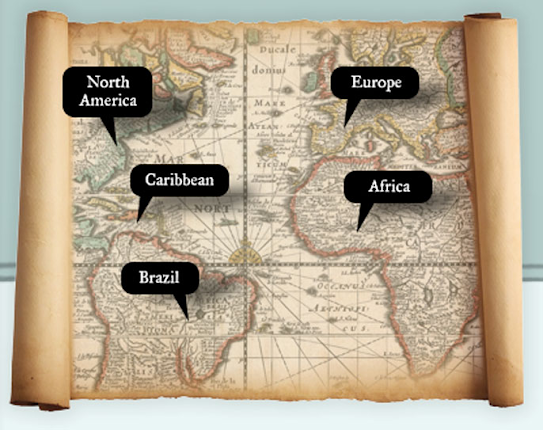
UC Santa Cruz has joined a newly formed consortium of institutions to ensure the preservation, stability, and future development of what has become the single most widely used online resource for anyone interested in slavery across the Atlantic world.

The SlaveVoyages database, previously hosted at Emory University, will now function as a cooperative academic collaboration through a contractual agreement among six institutions: Emory University, the Hutchins Center for African and African American Research at Harvard University, the National Museum of African American History and Culture, the Omohundro Institute of Early American History & Culture at William & Mary, Rice University, and three campuses of the University of California that will assume a joint membership — UC Santa Cruz, UC Irvine and UC Berkeley.

Slavevoyages.org had its origins in the 1960s, when historians began collecting data on slave ship voyages and estimating the number of enslaved Africans to cross the Atlantic from the 16th through 19th centuries. Over the years, the data was transferred from punch cards, to laptop computer, to a CD-ROM published in 1999, until it ultimately landed on a website at Emory University in 2008.

“Twenty years and four million viewers after its first appearance as a CD-ROM, the future of 48,000 slaving ventures recorded in SlaveVoyages is finally secured for posterity," noted Henry Louis Gates Jr., Alphonse Fletcher University Professor and director of Harvard’s Hutchins Center, a consortium member.

Gates has described SlaveVoyages.org as “a gold mine” and “one of the most dramatically significant research projects in the history of African studies, African American studies, and the history of world slavery itself.”

SlaveVoyages.org is the culmination of both independent and collaborative work by a multidisciplinary team of international scholars and historians —  including UC Santa Cruz history professor Greg O’Malley.

He helped create the Intra-American Slave Trade Database, which was added to www.slavevoyages.org as a companion to the much older Transatlantic Slave Trade Database in 2019. It documents more than 11,500 trading voyages that moved enslaved people from one port in the Americas to another.

O’Malley compiled the foundational data set of about 7,600 voyages for the Intra-American Database in research for his first book Final Passages: The Intercolonial Slave Trade of British America, 1619-1807, and then partnered with UC Irvine professor Alex Borucki and other scholars to expand the coverage to all of the Americas and take the project online.

“One powerful thing that the Intra-American Slave Trade Database reveals is just how ubiquitous slavery was in the Americas,” O’Malley noted. “We don’t just document voyages to the obvious places we all think of associated with slavery, such as Virginia, South Carolina, or Jamaica. The Intra-American database shows voyages delivering enslaved people as far north as Newfoundland and as far south as Argentina.”

“All of the original 13 colonies that would become the United States appear in the database receiving shipments of enslaved people. And ships registered in every colony traded slaves elsewhere as well. So slavery was not just a southern problem or atrocity. It was an American one, and I mean ‘America’ as both the entire U.S. and the entire hemisphere. Slavery was virtually everywhere in the Americas, in varying degrees, and white colonists across all the colonies profited from slave trading.”

O’Malley serves on the Operational Committee for the whole website, which reviews data submitted by researchers for inclusion, responds to the many inquiries from the media and the website’s users, and plans future developments. In that capacity, he was involved in the outreach to other institutions about consortium membership, meeting with staff at the National Museum of African American History and Culture and the Omohundro Institute for Early American History and Culture as part of recruiting them to join… 

Full news release at https://www.universityofcalifornia.edu/news/uc-santa-cruz-joins-new-consortium-ensure-future-slavevoyages-database

Sunday, May 10, 2015

Emory Lament

Can we file away these complaints?
Contemporary college teaching apparently grates on a professor from Emory U like, well, an emery board, and he writes about grade inflation and other matters that have gone wrong since the Good Old Days in the New York Times:

In the coming weeks, two million Americans will earn a bachelor’s degree and either join the work force or head to graduate school. They will be joyous that day, and they will remember fondly the schools they attended. But as this unique chapter of life closes and they reflect on campus events, one primary part of higher education will fall low on the ladder of meaningful contacts: the professors.That’s what students say. Oh, they’re quite content with their teachers; after all, most students receive sure approval. In 1960, only 15 percent of grades were in the “A” range, but now the rate is 43 percent..

Full set of gripes at http://www.nytimes.com/2015/05/10/opinion/sunday/whats-the-point-of-a-professor.html

Ah, if only we could go back to those Good Old Days:

Monday, February 18, 2013

Not All Presidents Are Celebrating Today

Emory President James Wagner
President Yudof may be celebrating his impending liberation (in August).  According to Inside Higher Ed, however, Emory University President James Wagner may not be celebrating this Presidents' Day:

Emory University President James Wagner has infuriated many on his campus and scholars elsewhere by using the president's letter in the new issue of Emory Magazine to say that the "three-fifths compromise" of the U.S. Constitution was a model for how people who disagree can work together for "a common goal." Following an explosion of social media criticism Saturday as word of Wagner's letter spread, he released an apology. "To those hurt or confused by my clumsiness and insensitivity, please forgive me," he wrote...The three-fifths compromise expanded the political clout of the slave states by codifying that black slaves counted for purposes of allocating seats in the House of Representatives as 60 percent of a white person (even though the slave states gave black people 0 percent of the voting or other rights of white people)...

Full story at http://www.insidehighered.com/news/2013/02/18/emory-president-sets-uproar-statements-three-fifths-compromise-and-then-apologizes 


Update at http://www.insidehighered.com/quicktakes/2013/02/19/critics-emory-president-arent-satisfied

Further update at http://www.insidehighered.com/quicktakes/2013/02/21/emory-president-censured