Pages

Sunday, July 28, 2024

Medicare Advantage Scrutiny Continues - Part 3 (straw in the wind)

We have been posting about Medicare Advantage plans - such as the plan UC offers retirees through UnitedHealthcare. As blog readers will know, these plans now cover over half of all Medicare participants - due in part to what appears to be overpayment by the feds. The MA plans have been heavily advertised to seniors as low-cost options that offer bells and whistles such as gym memberships. The question is what happens when you are really sick - and gym membership might not be relevant. And what happens if Congress tightens up on what is paid to MA plan insurers?

Here's a straw in the wind from Minneapolis: Beginning next year, HealthPartners will no longer be an in-network provider for UnitedHealthcare Medicare Advantage plans due in large part to UnitedHealthcare's high denial rate. 

In a letter to patients Tuesday, HealthPartners said the decision came after a year of negotiations.

"UnitedHealthcare delays and denies approval of payment for our patients’ Medicare Advantage claims at a rate unlike any other insurer in our market. At times, this denial rate has been up to 10 times higher than other insurers we work with. UnitedHealthcare’s practices create unnecessary waits and delays for you, and they interfere with our ability to provide you with timely and appropriate care," the press release stated.

HealthPartners will remain in-network for those with UnitedHealthcare through the end of 2024. The co-executive medical directors say they are making sure patients have as much notice as possible, and that people can consider options that would allow them to receive in-network care in 2025...

Full story at https://www.kare11.com/article/news/local/healthpartners-will-stop-accepting-unitedhealthcare-medicare-advantage-plans-in-2025/89-8d08e632-0ba7-4ca2-9b9f-29ffe90a4cdc.

Saturday, July 27, 2024

Do I sense a computer SNAFU?

Yours truly isn't sure why he received the email text below, but he senses a campus computer SNAFU:

Ascend 2.0 Program Pause

As you know, UCLA’s new procure-to-pay system, BruinBuy Plus, launched in January 2024. Since then, the Ascend 2.0 program team and University leaders have recognized the need to further assess the effectiveness of both our procurement processes and our broader finance organization operating model. As such, effective August 2, 2024, the Ascend 2.0 program will be paused, allowing UCLA to conduct an assessment to review our processes and technology. This exercise is estimated to take place summer through fall of 2024, with the aim of charting a clear path ahead for future business transformation. For more information, please review the BruinPost distributed to campus on June 26, 2024.

Resources 

Once the assessment is complete, we will reach back out to communicate relevant decisions and next steps with the research community. In the meantime, please do not hesitate to contact us at ascend2@ucla.edu with questions. This mailbox will continue to be monitored throughout the program pause. We also encourage you to use the resources below:

• Access the BruinBuy Plus hub for helpful resources, including subaward/subcontract quick reference guides, trainings for PIs and fund managers, and research-specific FAQ.

• Join BruinBuy Plus office hours to connect with subject matter experts and get answers to your procurement questions. Subaward/subcontract-specific office hours continue to be held on Thursdays from 11:00 a.m. to 12:00 p.m. PT.

• To request BruinBuy Plus support, please email help@it.ucla.edu, call 310-267-HELP (4357), or open a ticket directly in the ServiceNow portal.

• The Ascend 2.0 website will be largely decommissioned on August 2, 2024. However, the site’s homepage will continue to host several FAQs and will be updated once a decision about the future of Ascend 2.0 has been made.

• Continue to join monthly Research Administration Forum (RAF) meetings; access the Zoom link on the Office of Research Administration’s RAF webpage. Should the program restart in the coming months, an update will be shared with RAF.

We thank you for your partnership to date and for your patience as we strive to do what is best for UCLA and its research community.

Sincerely, 

Ascend 2.0 Team

--

Source: https://view.its.e.ucla.edu/?qs=9fe804b922f8a2a8f6073b765facd970aa7016bbd23797bd87442ecdd3c644dc5fbfebfa72b56a58e70e668e7417b1c96cbdcde5d10e6406a790185ef1f2601b657cf6a4d3cb53e78a0b978298b57999.

Key Regents for 2024-25


Below are the key Regents for the current year:

Janet Reilly https://regents.universityofcalifornia.edu/about/members-and-advisors/bios/janet-reilly.html will serve as Chair of the Board of Regents:

Appointed by Governor Newsom effective August 9, 2019 to a term expiring March 1, 2028; Co-founder and President of the Board of Directors for Clinic by the Bay; B.A., UCLA; Master of Science (Journalism), Northwestern University Medill School of Journalism, Media, Integrated Marketing Communications. Ms. Reilly is the current Chair of the Board.

Maria Anguiano https://regents.universityofcalifornia.edu/about/members-and-advisors/bios/maria-anguiano.html will serve as Vice Chair commencing July 1, 2024 through June 30, 2025.

Appointed by Governor Brown effective June 16, 2017 to a term expiring March 1, 2028; Executive Vice President, Arizona State University's Learning Enterprise; B.A. (Economics-Accounting and Spanish), Claremont McKenna College; M.B.A., Stanford Graduate School of Business. Ms. Anguiano is the current Vice Chair of the Board. 

As Chair of the Board, Regent Reilly is Chair of the Governance Committee, and an ex officio member of all standing committees. The other appointed chairs for the Board's Standing Committees for 2024-25 include:

Regent Michael Cohen, chair of the Finance and Capital Strategies Committee https://regents.universityofcalifornia.edu/about/members-and-advisors/bios/michael-cohen.html

Appointed by Governor Brown effective August 6, 2018 to a term expiring March 1, 2030; Chief Financial Officer of CalPERS, the California Public Employees' Retirement System; B.S., Stanford University (Urban Studies); Master's Degree in Public Affairs, Lyndon B. Johnson School at the University of Texas.

Regent Jonathan "Jay" Sures, chair of the Compliance and Audit Committee https://regents.universityofcalifornia.edu/about/members-and-advisors/bios/jay-sures.html

Appointed by Governor Brown effective January 4, 2019 to a term expiring March 1, 2020; re-appointed in 2020 (by Newsom) to a term expiring March 1, 2032; Vice Chairman of United Talent Agency; B.A. (Economics), UCLA.

Regent Richard Leib, chair of the Academic and Student Affairs Committee https://regents.universityofcalifornia.edu/about/members-and-advisors/bios/richard-leib.html

Appointed by Governor Brown effective August 6, 2018 to a term expiring March 1, 2026; President and CEO, Dunleer Strategies; B.A., University of California, Santa Barbara; M.A., Claremont Graduate University; J.D., Loyola University School of Law. 

Regent John Pérez, chair of the Health Services Committee https://regents.universityofcalifornia.edu/about/members-and-advisors/bios/john-perez.html

Appointed by Governor Brown effective November 17, 2014  to term expiring March 1, 2024; re-appointed in 2024 by Governor Newsom to a term expiring March 1, 2036; California State Assembly Speaker Emeritus and former Assemblymember.

Regent Greg Sarris, chair of the Public Engagement and Development Committee https://regents.universityofcalifornia.edu/about/members-and-advisors/bios/greg-sarris.html

Appointed by Governor Newsom effective June 29, 2023 to a term expiring March 1, 2026. Chairman of the Federated Indians of Graton Rancheria; Ph.D. in Modern Thought and Literature, Stanford University. 

Regent Mark Robinson, chair of the Investments Committee https://regents.universityofcalifornia.edu/about/members-and-advisors/bios/mark-robinson.html

Appointed by Governor Newsom effective July 22, 2022 to a term expiring March 1, 2034; Partner, Centerview Partners; Master of Business Administration, Harvard University; B.A. (History and Political Science), University of California, Berkeley.  

Regent Jose Hernandez, chair of the National Laboratories Committee https://regents.universityofcalifornia.edu/about/members-and-advisors/bios/jose-hernandez.html

Appointed by Governor Newsom effective August 20, 2021 to a term expiring March 1, 2033; President and Chief Executive Officer, Tierra Luna Engineering LLC; Master of Science, University of California, Santa Barbara (Electronics Engineering, Signals and Systems); B.S. (Electrical Engineering), University of the Pacific.

Source: https://ucnet.universityofcalifornia.edu/employee-news/uc-announces-board-of-regents-chair-and-vice-chair-committee-leadership-appointments-for-2024-25/. 

Friday, July 26, 2024

What $199 buys...


 How can people complain about inflation when you can still get such a deal for $199?

Watch the Afternoon Meeting of the Regents: July 17, 2024

We have been summarizing the July Regents meetings as time permits. The afternoon of July 17th is the missing piece. It contained a series of committee meetings. Some highlights below:

Public Engagement and Development included a presentation on the use of artificial intelligence in healthcare. One of the findings was that AI could reduce the time doctors currently spend on the computer and thereby increase time interacting with patients.

Compliance and Audit held a four minute open session approving UC's plan for the current year, including cybersecurity.

Academic and Student Affairs had a presentation on UC Press which is mainly self-funded. The Press was said to have a special focus on publishing the works of "FirstGen" authors. More controversial was the BOARS report on high school math requirements which reitererated the importance of algebra and calculus for students who want the option of STEM majors and careers. There was also discussion of campus-level "Collegiate Recovery Programs" that help students with substance abuse issues. Moving testimony by a recovering student was presented. Not all UC campuses have such programs. Davis, Irvine, Merced, Riverside, and UC-San Francisco are said to be "developing" programs. The other campuses including UCLA do have them.

Finance and Capital Strategies heard a report on the budget outlook for UC, a topic we have previously covered in various posts. Regent Pérez expressed concern that UC had been omitted from an education bond measure the legislature has put on the November ballot and suggested the omission reflected some dissatisfaction with UC. The committee approved an expansion of UC-SF's Children's Hospital in Oakland. As we have previously noted, the takeover of two hospitals in San Francisco entailed incorporation of employees there into the UC pension system. It was said that the pension system would be reimbursed for the added pension liability. 

Finally, there was some controversy over the design and costs of a proposed dorm at Davis. Questions were raised primarily by Regent Makarechian who has expertise in real estate matters. Those presenting the dorm proposal really had no good answers to his questions. Ultimately, the committee endorsed the recommendation with Makarechian abstaining. This episode is illustrative of a problem the Regents have when such issues come up. They have no independent research capacity. Some Regents may happen to have expertise when major proposals come up, but the Regents are heavily dependent on what they are told. In some respects, the Regents are a mini-legislature for UC but unlike the state legislature, they have no Legislative Analyst's Office to provide detailed reviews of proposals.*

Since the Regents have no official policy on retention of recordings of their meetings, we retain them indefinitely. You can see the various committee meetings described above at the link below:

https://archive.org/details/01-compliance-and-audit-7-17-2024.

====

*Long-time blog readers will recall the controversy over the location, design, and cost of the Grand Hotel at UCLA. The Regents at one point halted the proposal. But in the end, they went along, although the need for the structure - particularly during the ongoing budget crisis of the so-called Great Recession - was never established. In a similar vein, we continue to wonder what UCLA will do with its more recent $80 million purchase of a defunct Catholic college in Palos Verdes which is inaccessible from Westwood. The purchase was said to be responsive to pressures for enrollment growth, but the inaccessibility casts doubt on how it will help with that concern.

Thursday, July 25, 2024

You CAN get there...

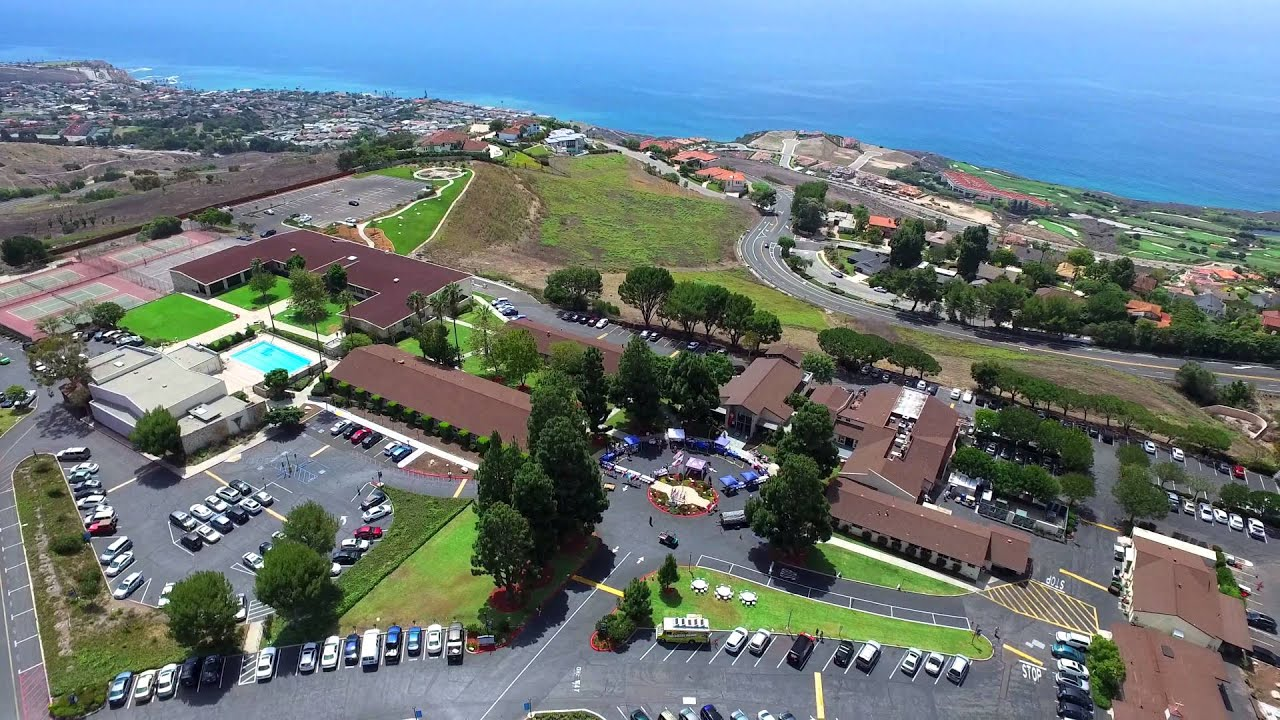
In his final quarterly newsletter, Chancellor Block deals with various issues including the $80 million purchase of the campus of the defunct Marymount California University in Palos Verdes:

...The new UCLA South Bay campus will advance sustainability, climate action and environmental justice. Formerly associated with Marymount California University, the 24.5-acre main campus in Rancho Palos Verdes and an 11-acre residential campus in nearby San Pedro, make up the largest land acquisition in UCLA’s history. 

UCLA South Bay promises to be a nexus of instruction, research, scholarship, civic engagement and community engagement, with a vibrant student presence. While our deans and faculty are developing curricula for this new location, it is off to a great start, with teaching, learning and connecting already underway. UCLA Extension began teaching classes there this month. UCLA South Bay has hosted our Student Leadership Academies, the Career Readiness Bootcamp for the Career Center, conferences, meetings and retreats for departments from UCLA and outside groups. The space is helping us cultivate key partnerships with civic leaders at the local, regional and state level as well...

Source: https://chancellor.ucla.edu/quarterly-updates/summer-2024-update/.

Yours truly wondered whether if he were standing in the middle of UCLA and wanted to get to "UCLA South Bay," how he would do it. So he consulted Google maps for directions:


Apart from that, no problem!

Who Has STEM? - Part 2 (and what do they need to have STEM?)


EdSource elaborates on the issue of math vs. data science courses that qualify for admission to UC: ...Since 1999, the number of students majoring in STEM more than tripled, from 14,081 to 48,851 in 2022. The proportion of STEM majors at UC increased from 32% to 44% of all majors, according to UC data.

Where does data science fit in?

The immediate impact of the decision is expected to be limited, since more than 99% of applicants to UC have taken Algebra 2 anyway, according to UC data. But interest in data science, in a world of burgeoning AI and uses for big datasets, has been mushrooming, and promoters pointed to introductory data as a way to skip Algebra 2.

The faculty committee, the Board of Admissions and Relations with Schools or BOARS, reaffirmed that position in February when it accepted a faculty workgroup’s report. The report examined the content of AP Statistics and the three most popular introductory data science courses and found “that none of these courses labeled as ‘data science’ even come close to meeting the required standard to be a ‘more advanced’ course (Algebra 2). They should be called “data literacy” courses, it said.

But where, [State Board of Education President Linda] Darling-Hammond asked in her letter, does that leave the status of potentially hundreds of other courses in data science, financial math and non-AP statistics that UC previously validated as satisfying Algebra 2? 

"Most districts will be starting the new school year in less than a month without sufficient clarity regarding the mathematics courses they will offer moving forward,” she wrote. “But the committee’s criteria and process are not yet fully transparent, and it has only evaluated four courses out of the hundreds that have previously been approved.”

One complication facing BOARS and staff within the UC Office of the President, which annually evaluates courses that school districts submit for approval, is that there are no state standards for data literacy. Each course must be examined independently.

Darling-Hammond’s letter raised a critical, intertwined issue: How will UC categorize introductory science and other courses as fourth-year high school math courses?

Neither UC nor CSU requires that high school graduates take four years of math, but they highly recommend it. According to UC data, about 80% of UC applicants take at least one course in advanced math beyond Algebra 2, usually precalculus or both precalculus and AP Statistics. The report did not include comparable CSU data.

BOARS created a second, 12-member faculty workgroup of STEM professors to examine what math courses will best prepare students to succeed at UC in whatever field they choose. A report in June agreed that the current three required foundational math courses make sense: Algebra I, Geometry, and Algebra 2, or Math 3 in districts that offer an integrated math sequence. It also emphasized that “to be recommended for a fourth year of mathematics study, (a course) must build substantially on the content of the lower-level sequence.”

With that in mind, the report, which BOARS adopted, divided high school math courses into four categories:

  • Category 1 consists of the foundational math courses
  • Category 2 courses, which include Precalculus and Calculus, best prepare students interested in STEM fields.
  • Category 3, which also builds on foundational courses, are courses suited for students interested in quantitative social sciences, such as psychology and history. It singles out AP Stats, but not data science.
  • Category 4, a catch-all for other courses in quantitative reasoning, would include data literacy. These courses “will continue broadening students’ interest and confidence in math” and may be appropriate for arts and humanities majors...
Full article at https://edsource.org/2024/high-schools-demand-clarity-about-ucs-new-math-policies/716103.

===
What is hard to determine from this controversy is whether what UC requires is really hard for high school administrators to understand or whether they would prefer not to understand it because of a commitment to courses that don't qualify. It seems pretty clear from the BOARS report that calculus is really important for STEM careers and majors. Is that message really so complicated?